
The Future of SEO: How to Rank in AI Search and Generative Search Engines
Search Has Changed—Is Your SEO Strategy Keeping Up?
For more than two decades, SEO has revolved around ranking web pages on traditional search engines. But in 2026, search is no longer limited to a list of blue links. AI-powered search engines and generative search experiences are transforming how people discover information, compare products, and make decisions.
Users now ask conversational questions, expect instant answers, and often receive AI-generated summaries before visiting a website. This shift has changed the rules of visibility.
The good news? SEO isn’t dead—it has evolved. Businesses that adapt their content strategy for AI search can build stronger authority, attract qualified traffic, and remain competitive in the new search landscape.
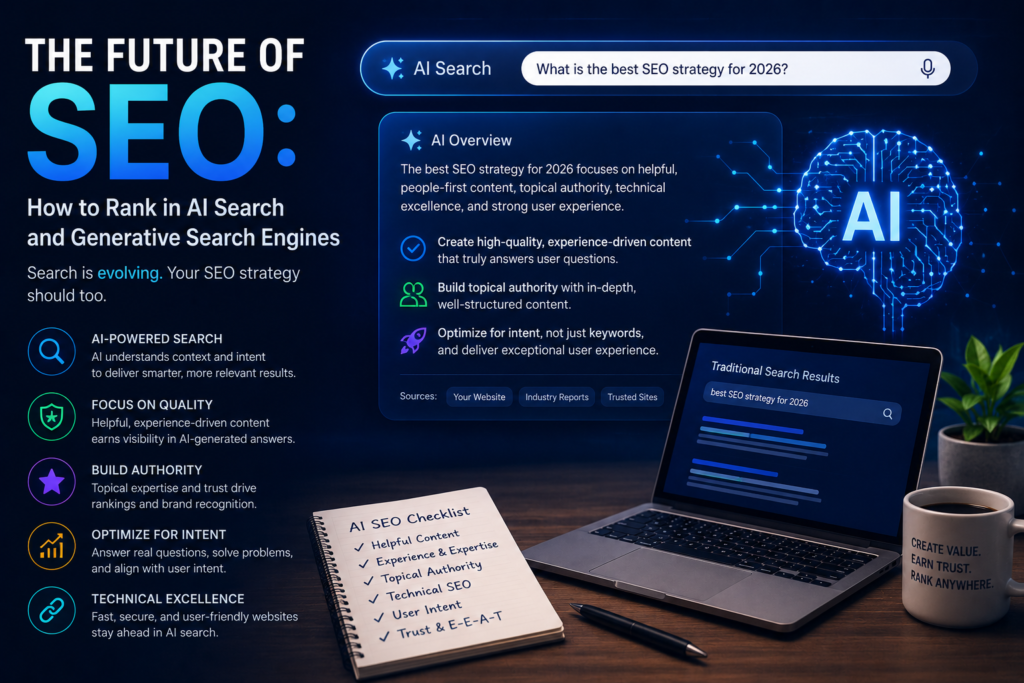
Why AI Search Is Changing SEO
Traditional search engines ranked pages based on keywords, backlinks, and technical optimization. While those factors still matter, AI search systems now evaluate content based on context, credibility, usefulness, and user satisfaction.
Instead of simply matching keywords, AI understands intent.
For example,
“What’s the best SEO strategy for a local business in 2026?”
expects a complete, trustworthy answer rather than a page stuffed with keywords.
AI search engines are designed to identify content that genuinely helps users solve problems.
someone searching:
What Are Generative Search Engines?
Generative search combines traditional indexing with artificial intelligence to create conversational answers using information gathered from multiple trusted sources.
Instead of showing only links, AI can:
- Summarize complex topics
- Compare products or services
- Explain step-by-step processes
- Answer follow-up questions
- Recommend relevant resources
For businesses, this means your content must be valuable enough to become part of the AI’s understanding of a topic—not just rank on page one.
The New Ranking Factors in 2026
1. Experience Matters More Than Ever
Search engines increasingly reward content created by people with genuine, hands-on experience.
Share:
- Personal case studies
- Campaign results
- Real client experiences
- Lessons learned
- Practical examples
Instead of saying:
“SEO improves rankings.”
Explain how you improved organic traffic, increased conversions, or solved a specific marketing challenge.
Original experience builds trust and distinguishes your content from generic AI-generated articles.
2. Create Helpful, Comprehensive Content
AI prefers content that fully answers a user’s question.
Rather than writing multiple short articles targeting similar keywords, create comprehensive resources that include:
- Definitions
- Practical advice
- Examples
- Frequently asked questions
- Actionable steps
- Related concepts
Your goal should be to become the most helpful resource on the topic.
3. Build Topical Authority
Publishing one excellent article isn’t enough.
Search engines evaluate whether your website consistently demonstrates expertise in a subject.
For a digital marketing portfolio, consider publishing related content on:
- SEO strategy
- Technical SEO
- Local SEO
- AI-powered marketing
- Content marketing
- Google Analytics
- Conversion optimization
- Link building
- Digital advertising
A well-connected library of content signals expertise and strengthens your authority.
4. Optimize for User Intent
Every search has an underlying goal.
Ask yourself:
- Is the user trying to learn?
- Compare solutions?
- Buy a product?
- Hire an expert?
- Solve a problem?
Structure your content around answering those questions rather than simply targeting keywords.
Intent-driven content consistently performs better in both traditional and AI-powered search.
5. Prioritize Content Quality Over Quantity
Publishing dozens of AI-generated articles without review rarely leads to long-term success.
High-quality content should:
- Be accurate
- Offer original insights
- Use clear language
- Include updated information
- Address user questions thoroughly
Human expertise remains one of the strongest competitive advantages in SEO.
Technical SEO Still Matters
Although AI has transformed search, technical optimization remains essential.
Ensure your website:
- Loads quickly
- Is mobile-friendly
- Uses secure HTTPS connections
- Has clear navigation
- Includes descriptive page titles
- Uses structured headings
- Optimizes images with alt text
- Fixes broken links
A technically sound website makes it easier for both search engines and AI systems to understand your content.
Content Formats That Perform Well in AI Search
AI search systems often favor content that is easy to understand and well organized.
Consider including:
- Step-by-step guides
- Frequently Asked Questions (FAQs)
- Comparison tables
- Case studies
- Checklists
- Statistics with context
- Visual infographics
- Original research
These formats improve readability while increasing the likelihood of being referenced in AI-generated responses.
Common SEO Mistakes in the AI Era
Many businesses still rely on outdated tactics.
Avoid:
- Keyword stuffing
- Publishing unedited AI-generated content
- Duplicate articles
- Thin content with little value
- Buying low-quality backlinks
- Ignoring page experience
- Writing solely for search engines
Modern SEO is about helping users first.
How to Optimize for AI Search
If you want your content to appear in AI-powered search experiences, focus on these best practices:
Write Naturally
Use conversational language that mirrors how people ask questions.
Answer Questions Directly
Provide clear answers before expanding with additional detail.
Demonstrate Expertise
Include practical examples, insights, and evidence from real-world experience.
Keep Content Updated
Review older articles regularly to ensure accuracy and relevance.
Organize Information Clearly
Use descriptive headings, bullet points, numbered lists, and concise paragraphs to improve readability.
Earn Trust
Support important claims with credible sources, maintain transparency, and avoid exaggerated promises.
Measuring SEO Success in 2026
SEO performance is no longer measured only by rankings.
Track metrics such as:
- Organic traffic
- Engagement time
- Conversion rate
- Lead generation
- Returning visitors
- Brand mentions
- Visibility in AI search experiences
- Featured snippets
- Click-through rate
These indicators provide a more complete picture of how your content performs.
The Future Belongs to Helpful Content
As AI continues to reshape search, one principle remains constant:
Create content that genuinely helps people.
Businesses that prioritize expertise, user experience, and trustworthy information will continue to earn visibility, regardless of how search technology evolves.
SEO in 2026 is no longer about gaming algorithms—it’s about becoming the most reliable answer to your audience’s questions.
Final Thoughts
The future of SEO isn’t about replacing traditional optimization with artificial intelligence. It’s about combining technical excellence, valuable content, and real expertise to meet the needs of modern search users.
By focusing on experience, authority, trust, and user-first content, you can improve your visibility in both traditional search engines and AI-powered search experiences.
The businesses that succeed won’t be those producing the most content—they’ll be the ones creating the most useful, credible, and memorable content.